
Robotics - Small Volume Production
Gain unprecedented speed and design freedom with our precision 3D printing and CNC solutions for Robotics prototyping and production.
Game Changer-3D Printing For Robotics Manufacturing

Rapid Innovation
Additive manufacturing enables engineers to turn digital designs into physical parts within days, accelerating R&D, reducing costs, and driving innovation.

Shape Freedom
Robotics needs unique parts. 3D printing easily creates complex, custom designs without expensive molds, unlike traditional methods.

Lighter Parts, Better Performance
With advanced 3D printing, robots gain lighter yet durable parts that maximize speed, efficiency, and payload. Example: 3D-printed grippers cut weight by 60% and reduce components by 80%.

On-Demand Supply
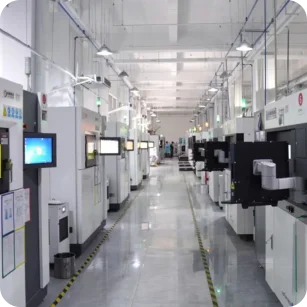
3D printing enables parts on demand, reducing vendor reliance, cutting inventory costs, and avoiding disruptions. With 2M parts produced yearly, Unionfab ensures flexibility and stability.
The Future of Robotics Manufacturing
3D printing is reshaping robotics by accelerating innovation, enabling customization, optimizing performance, and strengthening supply chains.
With advances in materials, AI, and generative design, additive manufacturing is evolving into a mainstream solution for lighter, smarter, and more cost-efficient robots.
Solutions for Robotics Small Volume Production
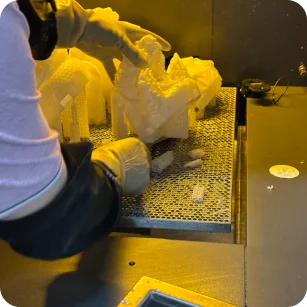
3D Printing Applications in Robotics
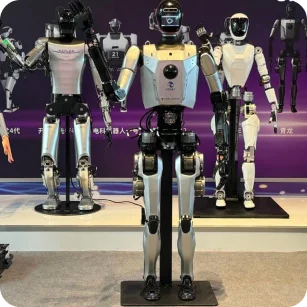
 Lightweight Structures: Bionic skeletons and chassis for humanoid robots; lightweight frames for industrial robotic arms.
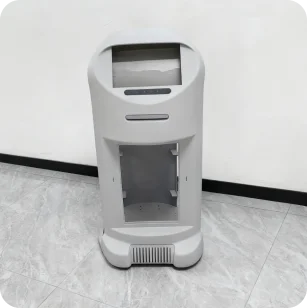
- Robot Shells & Components: Custom-designed robot housings and exterior parts.
- Customized End Effectors & Fixtures: End effectors for service robots; custom grippers, multi-finger, and flexible clamps.
- Joints & Gears: Rotary joints and gears for humanoid robots; bearings and bushings for industrial robots.
- Rapid Prototyping for Robotics: 3D printed robot prototypes and fast-iteration robotic parts.
- On-Demand Manufacturing: Robot spare parts and small-batch production.


Trusted by Robotics Engineers and Designers
Industrial robot and collaborative robot (co-bot) manufacturers
Commercial robot manufacturers
Domestic robot manufacturers
Military robot and drone manufacturers
Social and entertainment robot manufacturers
Autonomous driving technology companies
Ridesharing companies
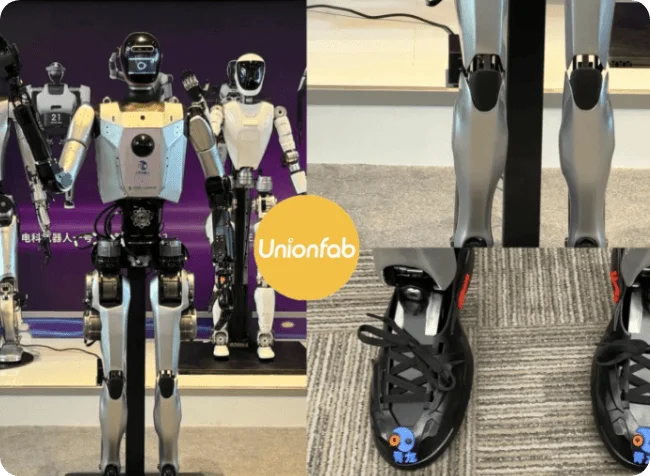
Humanoid Robotics 3D Printing Solutions | Unionfab
At WAIC 2024, Humanoid Robots (Shanghai) leveraged Unionfab's SLS 3D printing solution to rapidly manufacture key components of their humanoid robots. By combining high-strength nylon with TPU, the components achieved an optimal balance of lightweight design, durability, aesthetics, and performance, showcasing the significant advantages of 3D printing in rapid delivery, design freedom, and sustainable manufacturing.
- Weight reduced by 30%, significantly enhancing movement sensitivity.
- Durability enhanced by 30%, maintaining stability under high-frequency actions.
- Production cycle shortened by 40%, ensuring smooth delivery before the conference.
- Material utilization over 90%, significantly reducing waste compared to traditional processes.

The Main Advantages of 3D Printing in the Robotics Industry
- Mold-Free & Fast IterationRobot prototypes can be 3D printed directly without molds for appearance validation, functional testing, and structural optimization, greatly shortening the R&D cycle.
- Flexible Production, Lower CostAvoid expensive mold costs, ideal for small-batch production and prototyping, enabling true on-demand manufacturing.
- Lightweight Design for Higher EfficiencyLeverage topology optimization and composite printing to create lightweight parts that enhance robotic performance and reduce energy consumption.
- Complex Structures, Unlimited PossibilitiesProduce intricate hollow, honeycomb, and freeform structures beyond traditional machining limits for superior performance and integration.
- Multi-Material Capability for Every ApplicationSupport for metals, engineering plastics, and composites to meet diverse needs such as strength, wear resistance, conductivity, and heat tolerance.

Industry Standards and Compliance
Our small-batch 3D printing service for robotic components is not only focused on efficiency and innovation but also strictly adheres to international standards such as ISO, CE, and RoHS to ensure safety and compliance. All materials meet REACH and FDA requirements, making them suitable for industrial, service, and medical robotics applications.Overview of Common Manufacturing Processes
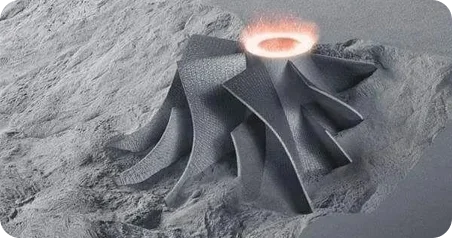
Metal 3D Printing Service
Selective Laser Melting (SLM): High-performance metal 3D printing produces strong, precise, and complex parts, ideal for lightweight and customized components, though it is costly and requires complex post-processing.
Common Materials: Stainless Steel (316L, 17-4PH), Aluminum Alloy (6061, AlSi10Mg), Inconel 625, Titanium Alloy (Ti6Al4V) etc.
Specific Applications: Precision sensor housings, gears, and small gripper components
.png?x-oss-process=image/format,webp/quality,Q_85)
Plastic / Polymer 3D Printing Service
Selective Laser Sintering (SLS): A strong plastic 3D printing process allows complex, lightweight designs without supports. Nylon and its composites offer good strength and wear resistance, but the surface may need polishing.
Common Materials: Nylon 6, 11, 12 (glass-filled), Nylon 12-FR, TPU etc.
Specific Applications: Functional parts, gears and load-bearing components
.png?x-oss-process=image/format,webp/quality,Q_85)
Thermoplastic 3D Printing Service
Fused Deposition Modeling (FDM): A cost-effective process suitable for both rapid functional prototyping and large-scale components. It supports a wide range of engineering-grade materials, offering high durability and chemical resistance for robotic parts.
Common Materials: PETG, PC, ASA, Stratasys ULTEM 9085, PC-FR(UL94-V0), PA6-GF, PA6-CF, Nylon 12 Carbon-filled etc.
Specific Applications: Internal structural frames, cable management brackets, and large-scale battery housings or protective covers
.png?x-oss-process=image/format,webp/quality,Q_85)
Resin 3D Printing Service
Stereo Lithography Apparatus (SLA): High-resolution resin 3D printing offers fine details, excellent surface quality, and stable performance for small-batch production.
Common Materials: Standard Resin, High Detail Resin, Nylon-like Resin, Tough Resin etc.
Specific Applications: Prototyping of sensor housings, non-load-bearing aesthetic covers, and conceptual gripper models.
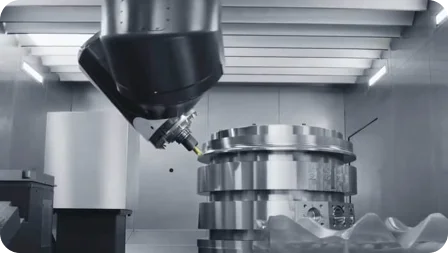
CNC Machining Service
CNC Machining: Offers excellent dimensional accuracy and surface quality, with a wide range of materials, making it ideal for robotic components that require high strength, assembly precision, and durability.
Common Materials: CNC Engineering Plastics, CNC Alloys (Aluminum, Stainless Steel, Copper, Bronze, Brass etc.), CNC Ceramics, CNC Rubber etc.
Specific Applications: Structural/load-bearing Parts, precision mechanical parts, molds and fixtures
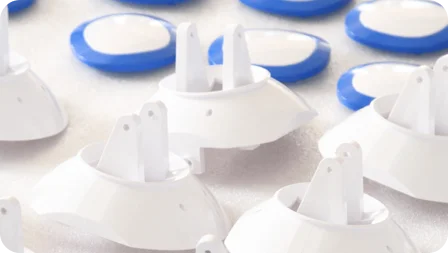
Silicone Molding Service
Silicone Molding: Suitable for small-batch production (about 5–50 pieces), it can quickly replicate various injection-molded and soft materials, especially for robotic components requiring specific elasticity, texture, or special materials.
Common Materials: PC-like, Nylon-like, PMMA-like, Flame resistance ABS, Heat-resistant 6160 etc.
Specific Applications: Protective / cushioning parts, gripping / tactile parts, dustproof / waterproof parts
Key Success Factors

Design Optimization
We provide component design optimization services, including topology optimization, lightweight design, and manufacturability analysis, to achieve the optimal balance between performance and cost.

Expert Support
We have an experienced team of engineers that provides comprehensive technical support, including material selection recommendations and process guidance, to ensure smooth project progress.

Rapid Prototyping
We support rapid prototyping and small-batch custom production within 3-7 days, helping customers shorten R&D cycles and accelerate product iteration.

Project Collaboration
From requirement analysis and solution design to production and post-processing, we provide full-process project management to ensure transparency and control at every stage, while maintaining efficient communication with the customer's R&D team.

Quality Assurance
All components undergo rigorous testing and comply with ISO, CE, and RoHS standards. We also provide comprehensive after-sales support to ensure customers have complete peace of mind.
Frequently Asked Question(FAQ)
We support a variety of materials, including plastics (PLA, ABS, nylon, PETG), composite materials (carbon fiber reinforced nylon), metals (stainless steel, aluminum alloy, titanium alloy), etc. For robot parts, it is recommended to use carbon fiber reinforced nylon or metal materials, which can balance lightweight and high strength.
Start Your Robotics Project Today
Accelerate every stage from design validation to small-batch production with cutting-edge 3D printing technology.
Get Instant Quote
